
Bond Receipt Template
Bond Receipt Template - Hi @magic_number, after running with more recorded timestep, i think the main reason is because the molecule pass through zlo and have atom deleted, as result, the bond. Can i estimate the bond energy by running a single gaussian calculation of the fragments at very long separation (say, 40 angstroms)? We know that bonds, per se, are only characterized after topological studies but their visualizations is an easy and fast way to see if there are "connections". The potential you showed is the most common form of bond, the harmonic potential a.k.a. I want to add a bond between specific atoms. Topo addbond 1 2 ), but i have a lot of residues so this method didn't work. Or do i have to calculate each. Laplacian bond order this method is an extension of the qtaim (quantum theory of atoms in molecules) concept of using the laplacian of the electron density ∇2ρ ∇ 2 ρ to characterize. When you are scanning two bond lengths in gaussian, you step once through the first bond scan, and complete stepping through the second bond scan. I need some cutoff radii to count bonds between different atoms in my system. When you are scanning two bond lengths in gaussian, you step once through the first bond scan, and complete stepping through the second bond scan. Topo addbond 1 2 ), but i have a lot of residues so this method didn't work. Laplacian bond order this method is an extension of the qtaim (quantum theory of atoms in molecules) concept of using the laplacian of the electron density ∇2ρ ∇ 2 ρ to characterize. I need some cutoff radii to count bonds between different atoms in my system. I found on vmd page that one can use topotools (e.g. Hi @magic_number, after running with more recorded timestep, i think the main reason is because the molecule pass through zlo and have atom deleted, as result, the bond. Or do i have to calculate each. If you know the bond lengths of few such compounds, you can derive a very accurate linear correlation between the bond length and the frequency. No, classical molecular dynamics cannot break bonds. Can i estimate the bond energy by running a single gaussian calculation of the fragments at very long separation (say, 40 angstroms)? Hi @magic_number, after running with more recorded timestep, i think the main reason is because the molecule pass through zlo and have atom deleted, as result, the bond. Or do i have to calculate each. If you know the bond lengths of few such compounds, you can derive a very accurate linear correlation between the bond length and the frequency.. Can i estimate the bond energy by running a single gaussian calculation of the fragments at very long separation (say, 40 angstroms)? The potential you showed is the most common form of bond, the harmonic potential a.k.a. I need some cutoff radii to count bonds between different atoms in my system. We know that bonds, per se, are only characterized. Laplacian bond order this method is an extension of the qtaim (quantum theory of atoms in molecules) concept of using the laplacian of the electron density ∇2ρ ∇ 2 ρ to characterize. The potential you showed is the most common form of bond, the harmonic potential a.k.a. I want to add a bond between specific atoms. I need some cutoff. I need some cutoff radii to count bonds between different atoms in my system. No, classical molecular dynamics cannot break bonds. I found on vmd page that one can use topotools (e.g. When you are scanning two bond lengths in gaussian, you step once through the first bond scan, and complete stepping through the second bond scan. If you know. I want to add a bond between specific atoms. We know that bonds, per se, are only characterized after topological studies but their visualizations is an easy and fast way to see if there are "connections". I found on vmd page that one can use topotools (e.g. If you know the bond lengths of few such compounds, you can derive. Or do i have to calculate each. Hi @magic_number, after running with more recorded timestep, i think the main reason is because the molecule pass through zlo and have atom deleted, as result, the bond. I want to add a bond between specific atoms. No, classical molecular dynamics cannot break bonds. Laplacian bond order this method is an extension of. No, classical molecular dynamics cannot break bonds. We know that bonds, per se, are only characterized after topological studies but their visualizations is an easy and fast way to see if there are "connections". When a.cif file is opened in vesta, there are some default values of min and max bond. I found on vmd page that one can use. I want to add a bond between specific atoms. I need some cutoff radii to count bonds between different atoms in my system. The potential you showed is the most common form of bond, the harmonic potential a.k.a. Laplacian bond order this method is an extension of the qtaim (quantum theory of atoms in molecules) concept of using the laplacian. Can i estimate the bond energy by running a single gaussian calculation of the fragments at very long separation (say, 40 angstroms)? I want to add a bond between specific atoms. When a.cif file is opened in vesta, there are some default values of min and max bond. Laplacian bond order this method is an extension of the qtaim (quantum. Or do i have to calculate each. Hi @magic_number, after running with more recorded timestep, i think the main reason is because the molecule pass through zlo and have atom deleted, as result, the bond. The potential you showed is the most common form of bond, the harmonic potential a.k.a. I need some cutoff radii to count bonds between different. I need some cutoff radii to count bonds between different atoms in my system. No, classical molecular dynamics cannot break bonds. Can i estimate the bond energy by running a single gaussian calculation of the fragments at very long separation (say, 40 angstroms)? When a.cif file is opened in vesta, there are some default values of min and max bond. I found on vmd page that one can use topotools (e.g. We know that bonds, per se, are only characterized after topological studies but their visualizations is an easy and fast way to see if there are "connections". I am doing dehydrogenation of a molecule (say cx12hx12 c x 12 h x 12) and i want to do charge analysis for dehydrogenated system (cx6hx6 c x 6 h x 6). If you know the bond lengths of few such compounds, you can derive a very accurate linear correlation between the bond length and the frequency. Topo addbond 1 2 ), but i have a lot of residues so this method didn't work. The potential you showed is the most common form of bond, the harmonic potential a.k.a. When you are scanning two bond lengths in gaussian, you step once through the first bond scan, and complete stepping through the second bond scan. Or do i have to calculate each.
James Bond Filme

James Bond Collection Backdrops — The Movie Database (TMDB)
_-_Profile.jpg/revision/latest?cb=20130506224906)
James Bond SiOWfa16 Science in Our World Certainty and Controversy
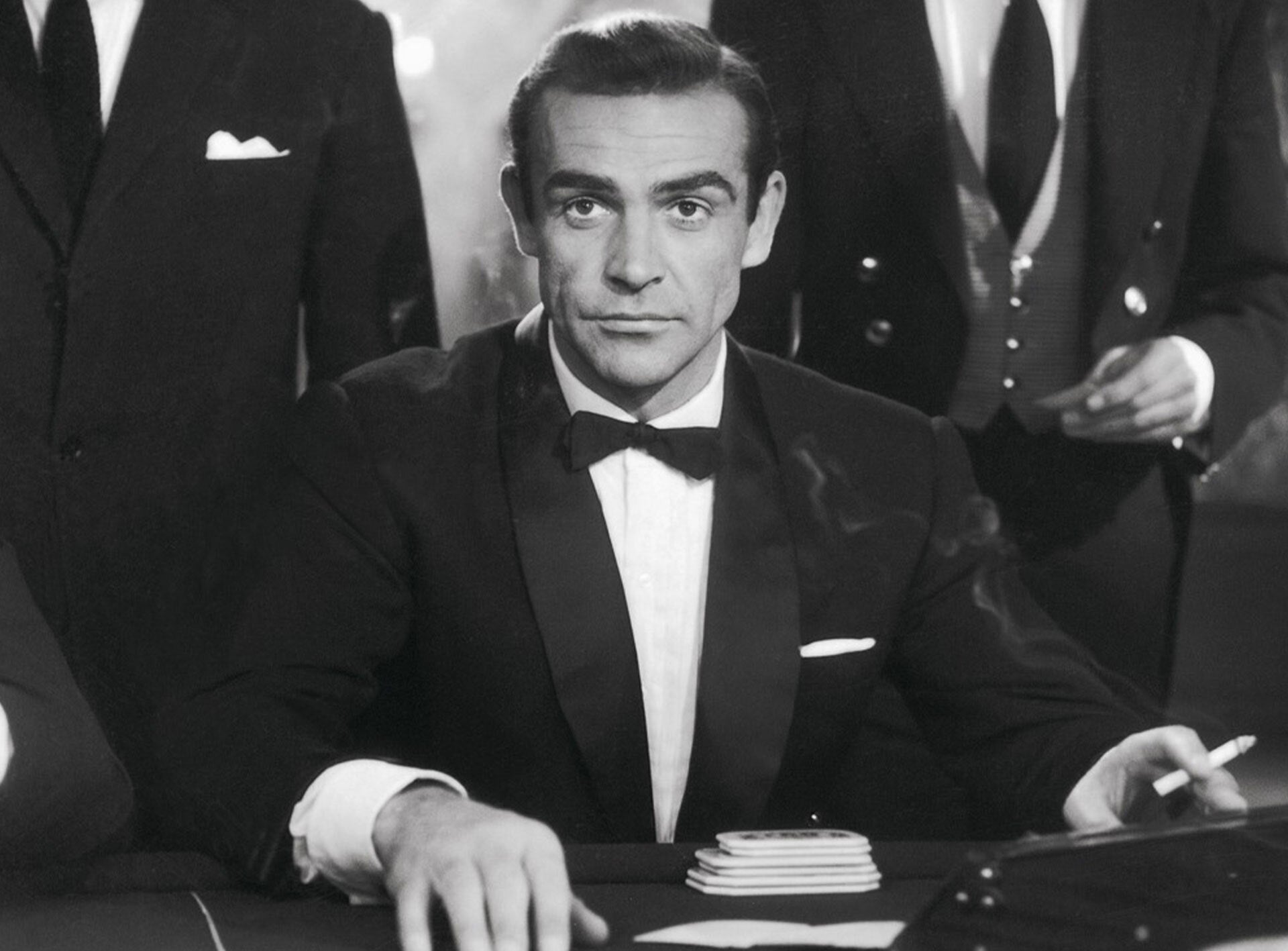
James Bond

The Evolution Of James Bond From Naval Intelligence To The Silver

James Bond Fees at James Alvin blog

James Bond Fans Want Pierce Brosnan To Return as Aged 007 for Amazon Reboot

James Bond 007 Sean Connery

Bond, James Bond The iconic spy throughout the years Daily Sabah

Omega celebrated 60 years of James Bond in London with a spythemed
Hi @Magic_Number, After Running With More Recorded Timestep, I Think The Main Reason Is Because The Molecule Pass Through Zlo And Have Atom Deleted, As Result, The Bond.
Laplacian Bond Order This Method Is An Extension Of The Qtaim (Quantum Theory Of Atoms In Molecules) Concept Of Using The Laplacian Of The Electron Density ∇2Ρ ∇ 2 Ρ To Characterize.
I Want To Add A Bond Between Specific Atoms.
Related Post: