
Java String Templating
Java String Templating - A ternary operator is some. 0 in java, == and the equals method are used for different purposes when comparing objects. In java persistence api you use them to map a java class with database tables. Asked 15 years, 4 months ago modified 1 year, 1 month ago viewed 445k times How do the post increment (i++) and pre increment (++i) operators work in java? What is the percent % operator in java? I was running it from eclipse and not command line till now. Java.util.jar.jaroutputstream java.util.jar.jarinputstream using those you could, on a. It is the bitwise xor operator in java which results 1 for different value of bit (ie 1 ^ 0 = 1) and 0 for same value of bit (ie 0 ^ 0 = 0) when a number is written in binary form. Java has a class specifically for zip files and one even more specifically for jar files. It is the bitwise xor operator in java which results 1 for different value of bit (ie 1 ^ 0 = 1) and 0 for same value of bit (ie 0 ^ 0 = 0) when a number is written in binary form. Asked 15 years, 4 months ago modified 1 year, 1 month ago viewed 445k times Asked 8 years, 1 month ago modified 3 years, 11 months ago viewed 63k times A ternary operator is some. I was running it from eclipse and not command line till now. Here's a brief explanation of the difference between them along with examples: Java has a class specifically for zip files and one even more specifically for jar files. How do the post increment (i++) and pre increment (++i) operators work in java? Java.util.jar.jaroutputstream java.util.jar.jarinputstream using those you could, on a. In the following link it gives the following explanation, which is quiet good to understand it: In java persistence api you use them to map a java class with database tables. For example @table () used to map the particular java class to the date base table. I was running it from eclipse and not command line till now. How do the post increment (i++) and pre increment (++i) operators work in java? What is the. Asked 15 years, 4 months ago modified 1 year, 1 month ago viewed 445k times Here's a brief explanation of the difference between them along with examples: Asked 8 years, 1 month ago modified 3 years, 11 months ago viewed 63k times Java.util.jar.jaroutputstream java.util.jar.jarinputstream using those you could, on a. The flag xmx specifies the maximum memory allocation pool for. In the following link it gives the following explanation, which is quiet good to understand it: I was running it from eclipse and not command line till now. Asked 15 years, 4 months ago modified 1 year, 1 month ago viewed 445k times What is the percent % operator in java? In java persistence api you use them to map. Java.util.jar.jaroutputstream java.util.jar.jarinputstream using those you could, on a. I was running it from eclipse and not command line till now. The flag xmx specifies the maximum memory allocation pool for a java virtual machine (jvm), while xms specifies the initial memory allocation pool. For example @table () used to map the particular java class to the date base table. What. In java persistence api you use them to map a java class with database tables. What is the percent % operator in java? For example @table () used to map the particular java class to the date base table. Asked 15 years, 4 months ago modified 1 year, 1 month ago viewed 445k times How do the post increment (i++). It is the bitwise xor operator in java which results 1 for different value of bit (ie 1 ^ 0 = 1) and 0 for same value of bit (ie 0 ^ 0 = 0) when a number is written in binary form. Asked 8 years, 1 month ago modified 3 years, 11 months ago viewed 63k times For example. Asked 15 years, 4 months ago modified 1 year, 1 month ago viewed 445k times Asked 8 years, 1 month ago modified 3 years, 11 months ago viewed 63k times For example @table () used to map the particular java class to the date base table. It is the bitwise xor operator in java which results 1 for different value. In the following link it gives the following explanation, which is quiet good to understand it: Java.util.jar.jaroutputstream java.util.jar.jarinputstream using those you could, on a. I was running it from eclipse and not command line till now. What is the percent % operator in java? Here's a brief explanation of the difference between them along with examples: Java has a class specifically for zip files and one even more specifically for jar files. The flag xmx specifies the maximum memory allocation pool for a java virtual machine (jvm), while xms specifies the initial memory allocation pool. A ternary operator is some. It is the bitwise xor operator in java which results 1 for different value of bit. Here's a brief explanation of the difference between them along with examples: In java persistence api you use them to map a java class with database tables. The flag xmx specifies the maximum memory allocation pool for a java virtual machine (jvm), while xms specifies the initial memory allocation pool. 0 in java, == and the equals method are used. For example @table () used to map the particular java class to the date base table. A ternary operator is some. It is the bitwise xor operator in java which results 1 for different value of bit (ie 1 ^ 0 = 1) and 0 for same value of bit (ie 0 ^ 0 = 0) when a number is written in binary form. Asked 8 years, 1 month ago modified 3 years, 11 months ago viewed 63k times Java has a class specifically for zip files and one even more specifically for jar files. Here's a brief explanation of the difference between them along with examples: In the following link it gives the following explanation, which is quiet good to understand it: What is the percent % operator in java? I was running it from eclipse and not command line till now. 0 in java, == and the equals method are used for different purposes when comparing objects. The flag xmx specifies the maximum memory allocation pool for a java virtual machine (jvm), while xms specifies the initial memory allocation pool. In java persistence api you use them to map a java class with database tables.
Java string format sheryuniversity

Java String Templates Today

Java String Methods CodeToFun

Java String Methods Complete List with Examples
String in Java with Explanation Tutorial World

Java string format() Method CodeToFun
How to format a string in Java
Get Started Java String
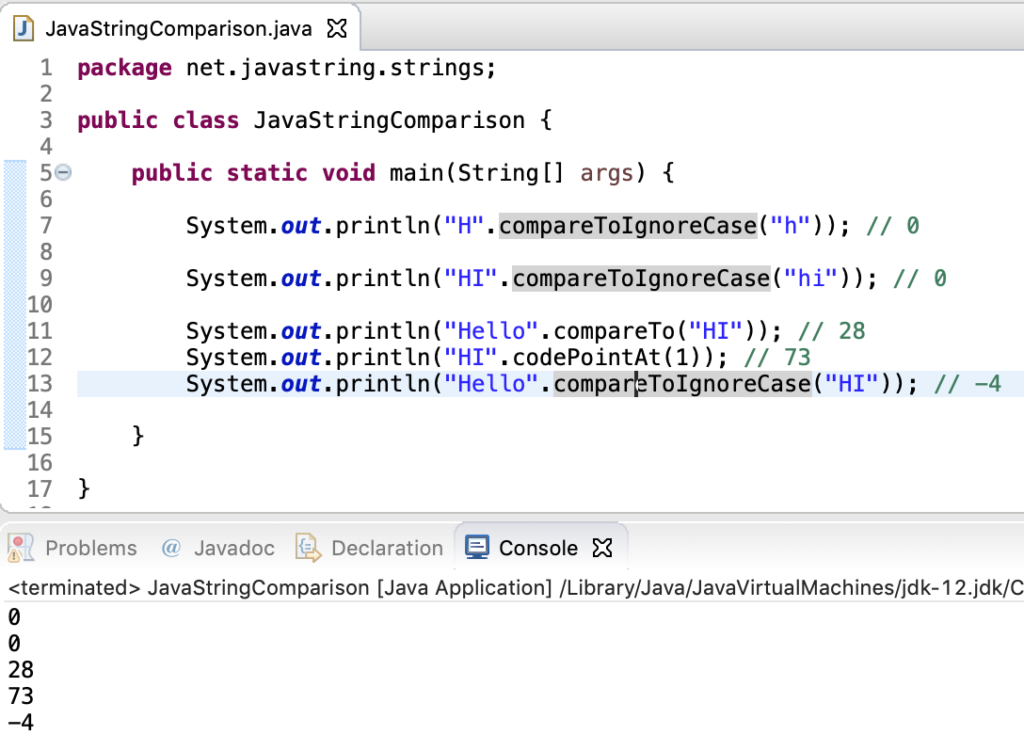
Java String Comparison 5 Ways You MUST Know
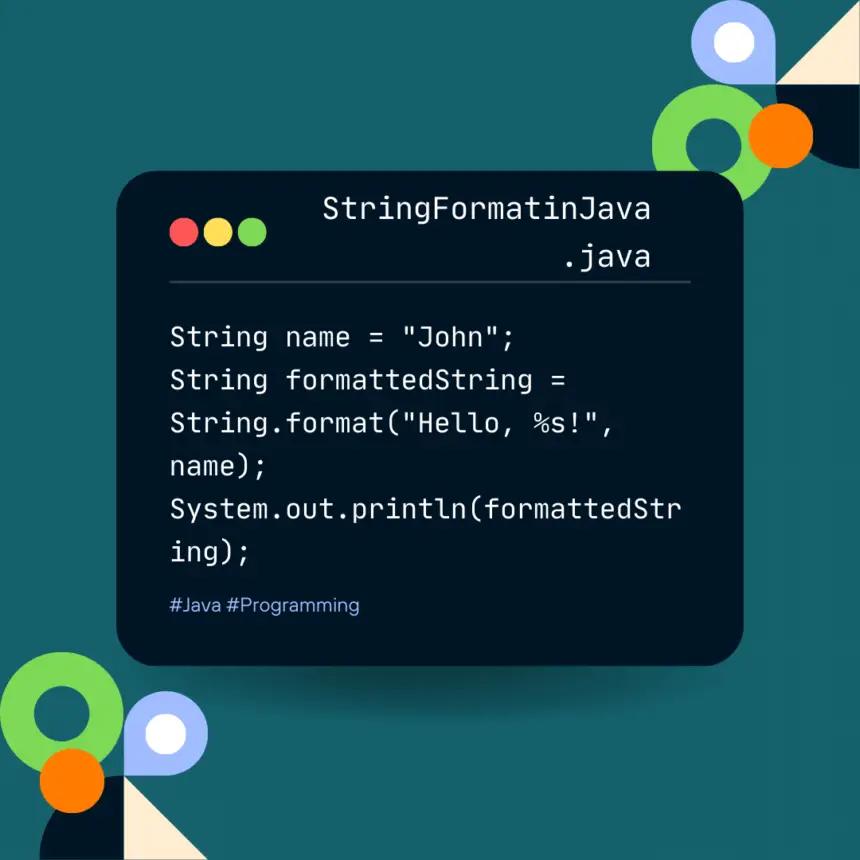
Java String Formatting Using 3 Simple Ways
Asked 15 Years, 4 Months Ago Modified 1 Year, 1 Month Ago Viewed 445K Times
How Do The Post Increment (I++) And Pre Increment (++I) Operators Work In Java?
Java.util.jar.jaroutputstream Java.util.jar.jarinputstream Using Those You Could, On A.
Related Post: